The organelle · Lysosome
The lysosome is the cell's garbage disposal.
Organelles are the "little organs" inside a cell, and each one has a job. The lysosome's job is to digest worn-out parts and junk, then send the pieces back to be reused.
Read how it works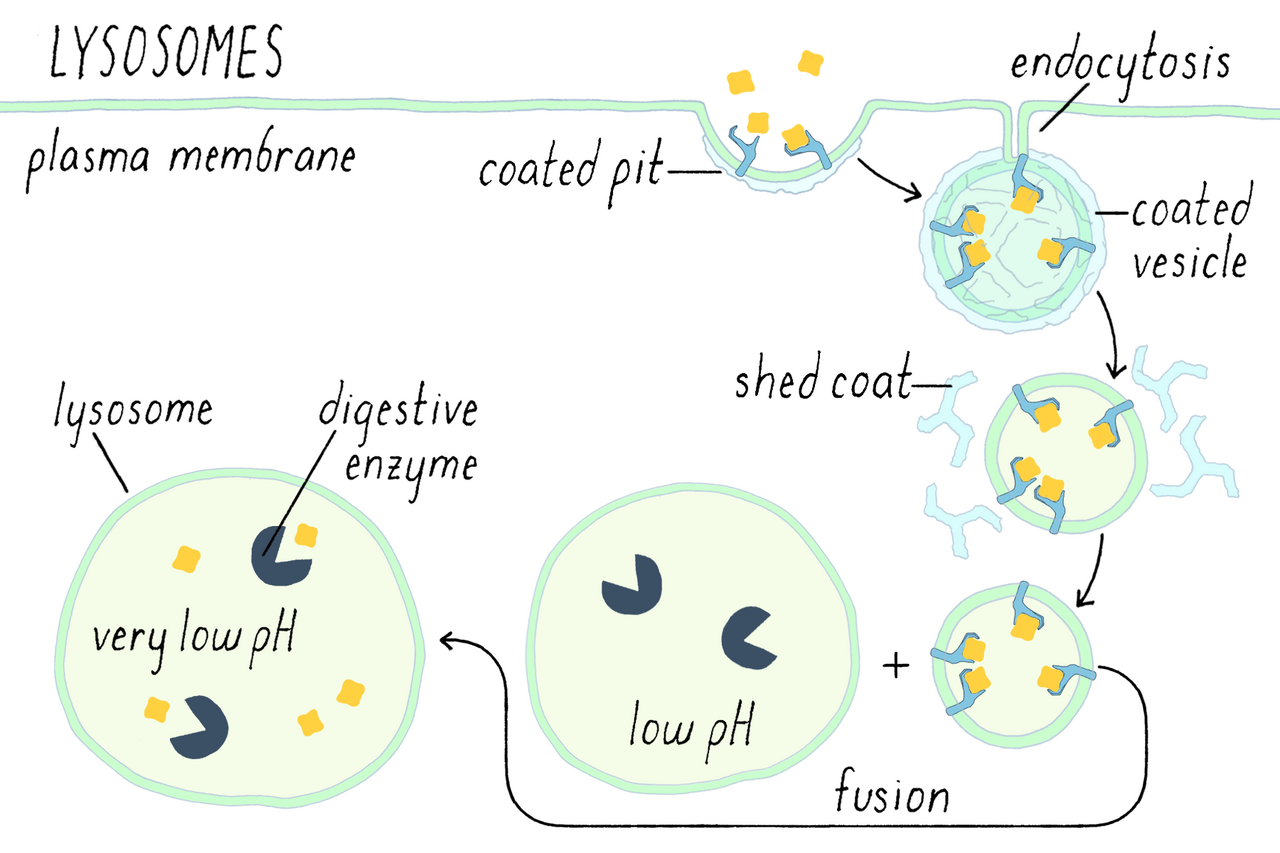 Image: explorebiology, CC BY 4.0, Wikimedia Commons
02 07
Next: What Goes Wrong
What goes wrong inside the brain cell

01 / Where it is
Inside every animal cell
Your cells are like tiny factories. The nucleus holds the instructions, the mitochondria make energy, and the lysosomes are the recycling center.
Lysosomes are small bubbles, each wrapped in a single membrane. That membrane keeps their acid and enzymes from digesting the rest of the cell.
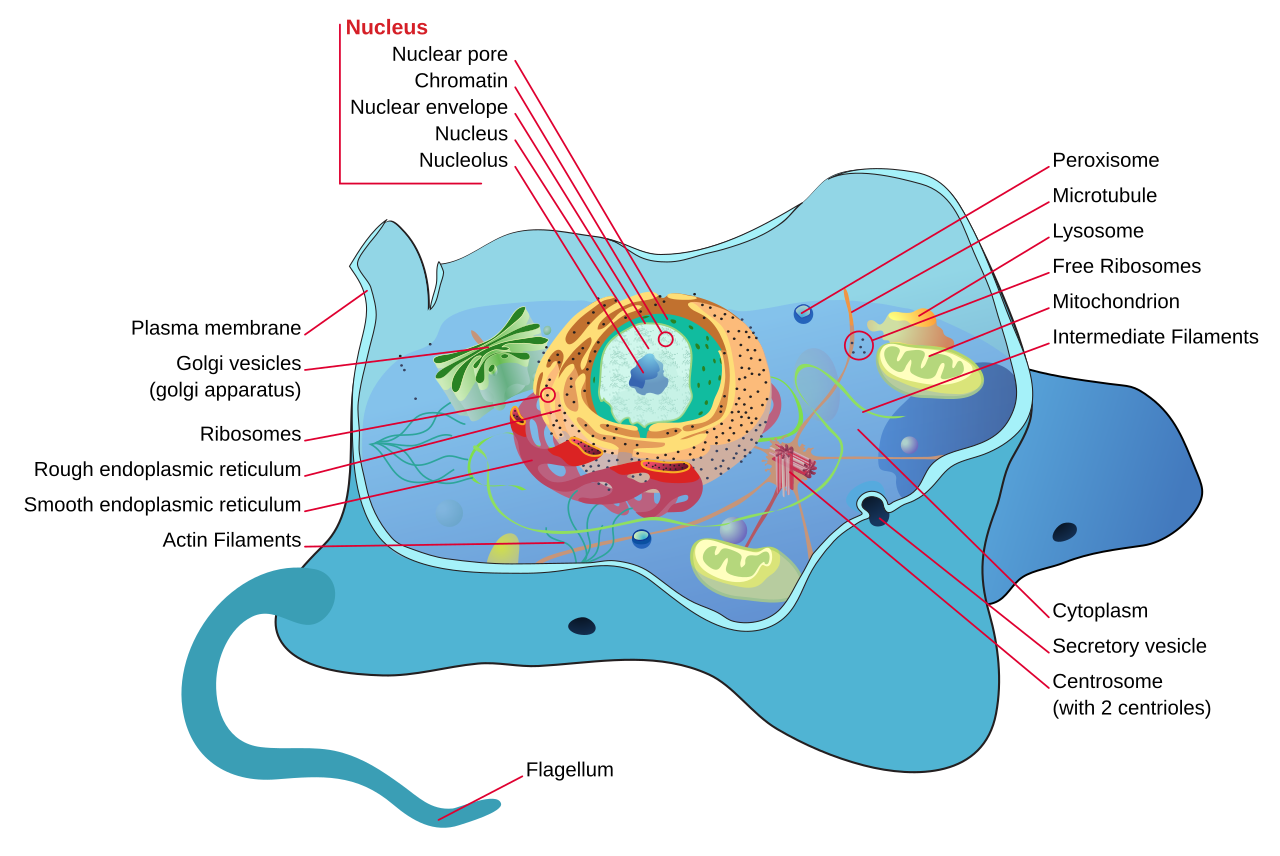
Image: Mariana Ruiz (LadyofHats), public domain, Wikimedia Commons

02 / Its parts
A closer look at the lysosome
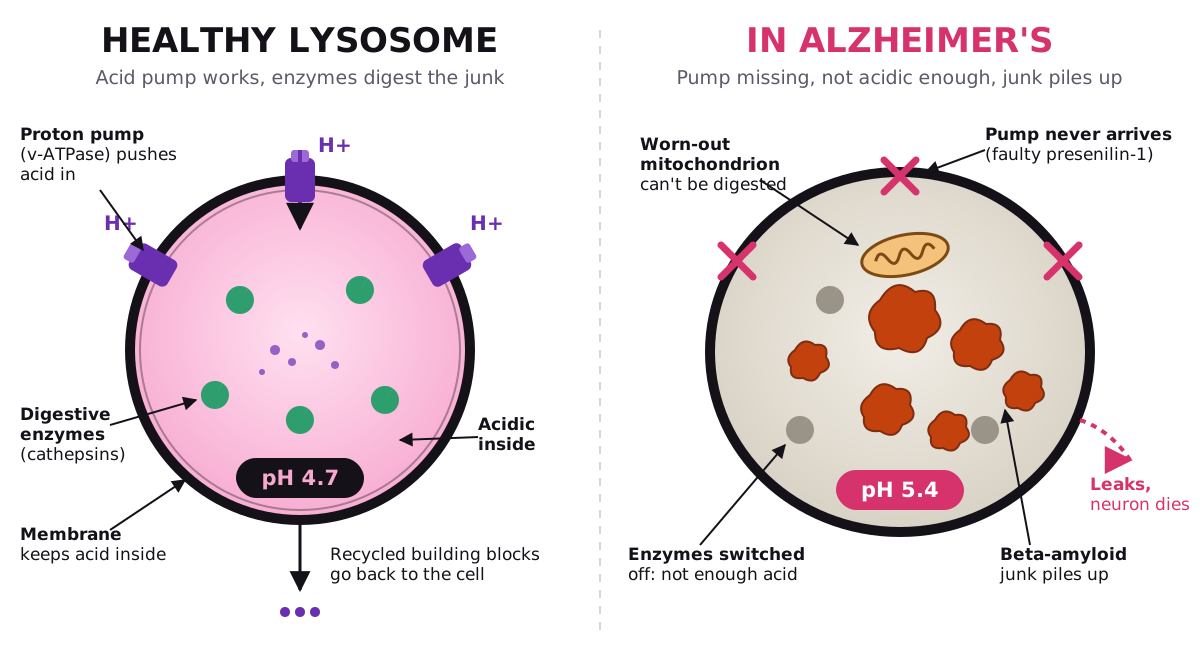
Image: Diagram made for this project, based on Lee et al. 2010 (Cell) and Nixon & Rubinsztein 2024
Membrane
One layer that keeps the acid and enzymes locked inside.
Acidic inside
pH about 4.5 to 5. The enzymes only work in strong acid.
Enzymes
About 60 digestive enzymes (hydrolases), like cathepsins, that cut junk apart.
Proton pump
The v-ATPase pump uses energy (ATP) to push acid in. This is the part that fails in Alzheimer's.
03 / Its job
Normal function and homeostasis
- Self-cleaning (autophagy): the cell wraps up old parts in a bubble and sends them to the lysosome to be digested.
- Breaking down junk proteins before they clump together.
- Recycling: the pieces (amino acids, sugars) go back to the cell as new building blocks.
- Killing germs that white blood cells swallow.
Homeostasis means keeping conditions steady inside a safe range. By constantly cleaning and recycling, lysosomes keep the inside of the cell balanced and working.
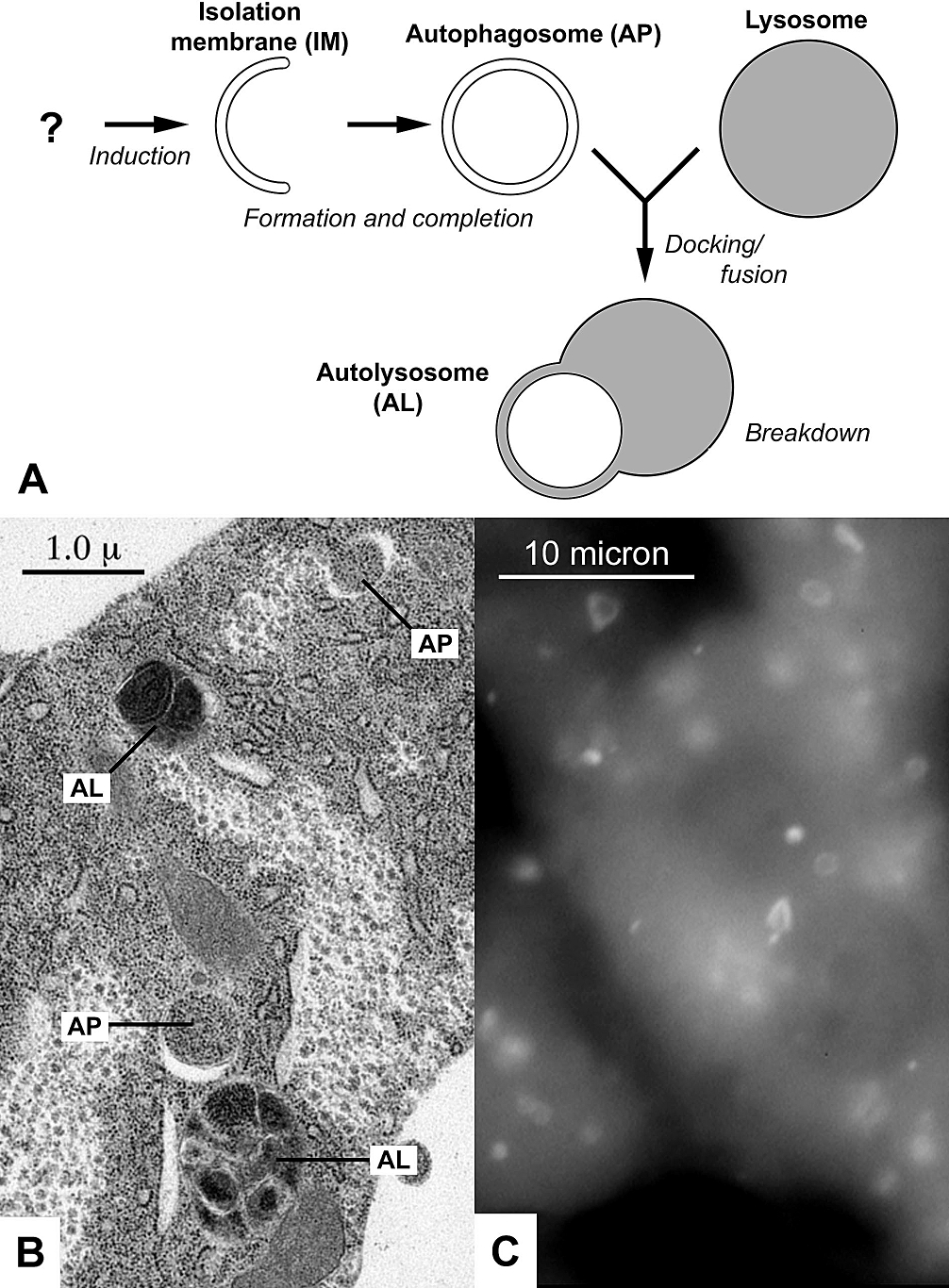
Image: Juhasz G, Neufeld TP, PLoS Biology, CC BY 2.5, Wikimedia Commons

04 / Where it matters most
Which cells need it most
- Neurons (brain cells). They don't divide and can't be replaced, so one neuron has to keep itself clean for 80+ years. That makes them extra sensitive when lysosomes fail.
- White blood cells (macrophages) that eat bacteria and digest them in lysosomes.
- Liver immune cells (Kupffer cells), which are packed with lysosomal enzymes.
- Microglia, the brain's own cleanup crew.
Its partner: the mitochondria
Mitochondria make the cell's energy (ATP). Neurons use a huge amount of it. When a mitochondrion wears out, the lysosome is supposed to digest it (that's mitophagy). If the lysosome fails, broken mitochondria pile up, energy runs low and harmful chemicals leak out.
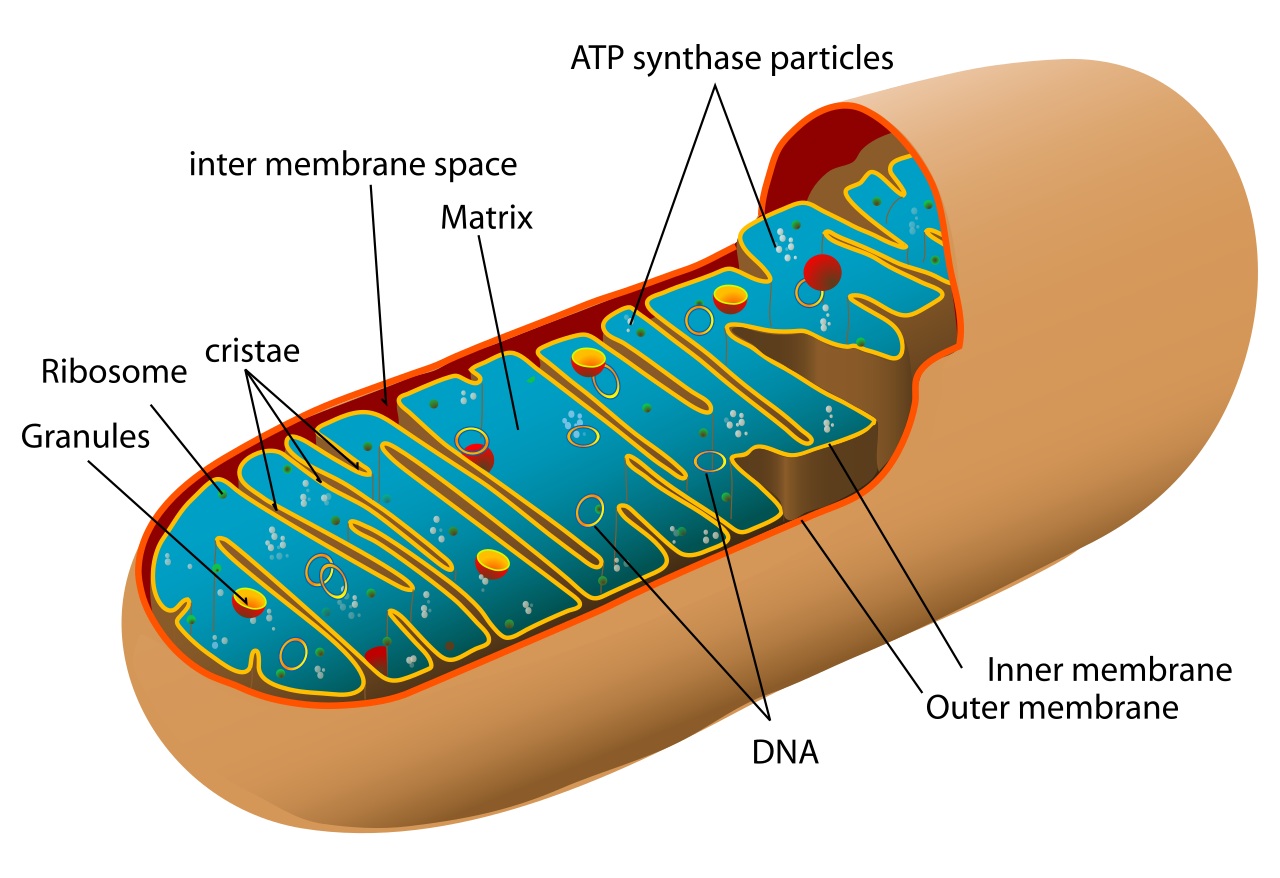
Image: Mariana Ruiz Villarreal (LadyofHats), public domain, Wikimedia Commons

Sources for this tab
- OpenStax Biology 2e, 4.3 Eukaryotic Cells. https://openstax.org/books/biology-2e/pages/4-3-eukaryotic-cells
- OpenStax Anatomy and Physiology 2e, 1.5 Homeostasis. https://openstax.org/books/anatomy-and-physiology-2e/pages/1-5-homeostasis
- Alberts et al. Molecular Biology of the Cell, Lysosomes (NCBI Bookshelf). https://www.ncbi.nlm.nih.gov/books/NBK26882/
- Lysosome remodeling review (PMC9189017). https://pmc.ncbi.nlm.nih.gov/articles/PMC9189017/
- Neuronal Lysosomes review (PMC6170731). https://pmc.ncbi.nlm.nih.gov/articles/PMC6170731/
- Nixon RA, Rubinsztein DC (2024). Mechanisms of autophagy-lysosome dysfunction in neurodegenerative diseases. Nature Reviews Molecular Cell Biology 25:926-946. https://pmc.ncbi.nlm.nih.gov/articles/PMC12239022/
- Kupffer Cells in Health and Disease (PMC7121975). https://pmc.ncbi.nlm.nih.gov/articles/PMC7121975/
- Mitophagy in Alzheimer's disease review (PMC7017092). https://pmc.ncbi.nlm.nih.gov/articles/PMC7017092/
- Mitochondria and mitophagy in Alzheimer's review (PMC6880761). https://pmc.ncbi.nlm.nih.gov/articles/PMC6880761/
- Lee JH, Yu WH, Kumar A, et al. (2010). Lysosomal proteolysis and autophagy require presenilin 1 and are disrupted by Alzheimer-related PS1 mutations. Cell 141(7):1146-1158. https://www.cell.com/cell/fulltext/S0092-8674(10)00544-1