The dysfunction
No acid, no cleanup, no neuron.
In Alzheimer's, the lysosome's acid pump stops working. Without enough acid, its enzymes switch off, junk piles up inside the brain cell, and the cell dies.
Follow the chain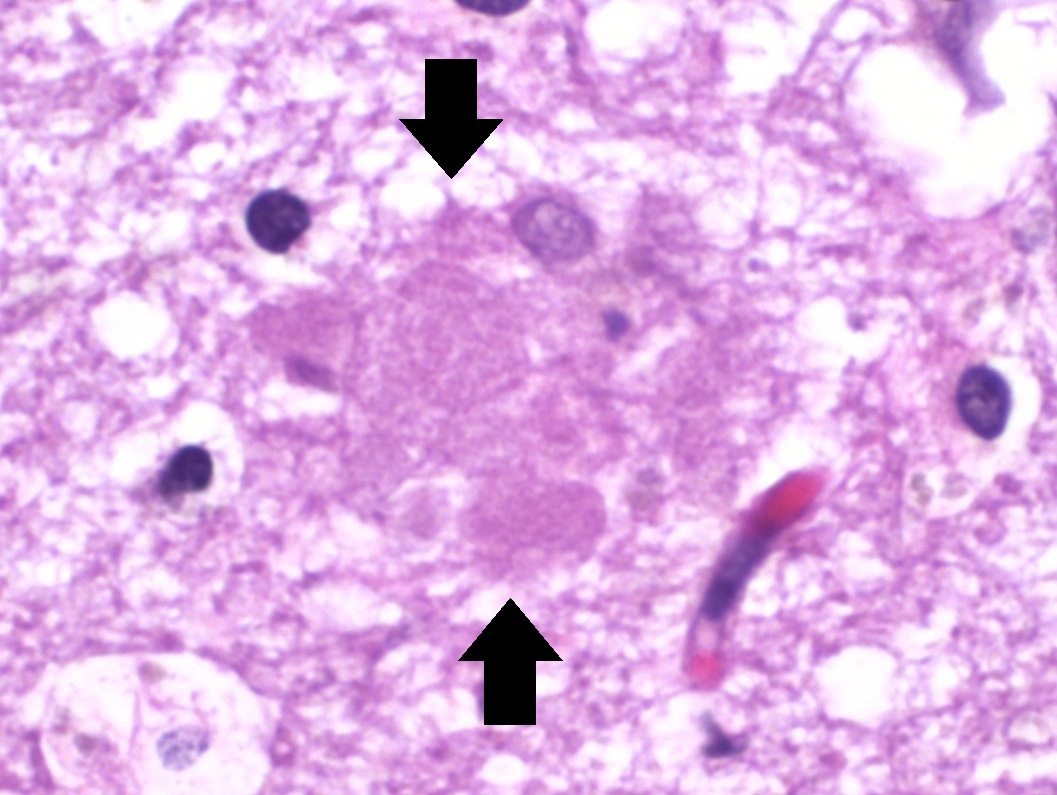 Image: Mikael Häggström, M.D., CC0, Wikimedia Commons
03 07
Next: Symptoms & Treatment
Symptoms, treatments and the newest breakthrough

01 / How the organelle's function is affected
The chain of failure
- The pump goes missing. A protein called presenilin-1 is needed to install the acid pump (v-ATPase) in the lysosome. When presenilin-1 is faulty, the pump never arrives.
- The acid drops. A healthy lysosome measured pH 4.7. Without presenilin-1 it was 5.4, which is not acidic enough.
- The enzymes switch off. The digestive enzymes (cathepsins) only work in strong acid, so digestion stops.
- Traffic jam. Bags of trash keep arriving and never get emptied. This shows up at the earliest stage, before any plaques.
- Beta-amyloid piles up inside the neuron, in the swollen, broken lysosomes.
- The "poisonous flower." The stuffed bubbles crowd around the nucleus in a flower shape that scientists named PANTHOS.
- The neuron dies. The lysosomes leak, their enzymes spill out, and the cell dies. What's left becomes an amyloid plaque.
The big finding: scientists used to think plaques start outside cells. A 2022 Nature Neuroscience study found that many start inside neurons, in failed lysosomes. It was done mostly in mice, and the same pattern showed up in human Alzheimer's brains.
02 / The cause
Why it breaks
- Rare genes (APP, PSEN1, PSEN2) directly cause early-onset Alzheimer's, usually in a person's 40s or 50s. PSEN1 makes presenilin-1, the exact protein that installs the lysosome's acid pump.
- APOE-e4 is the biggest risk gene for regular, late-onset Alzheimer's. It's found in 40-65% of people diagnosed, and it also clogs the cell's trash system.
- Age is the biggest risk overall. Lysosomes and mitochondria wear down over time.
- Down syndrome: an extra chromosome 21 means an extra copy of the APP gene and too much beta-amyloid.
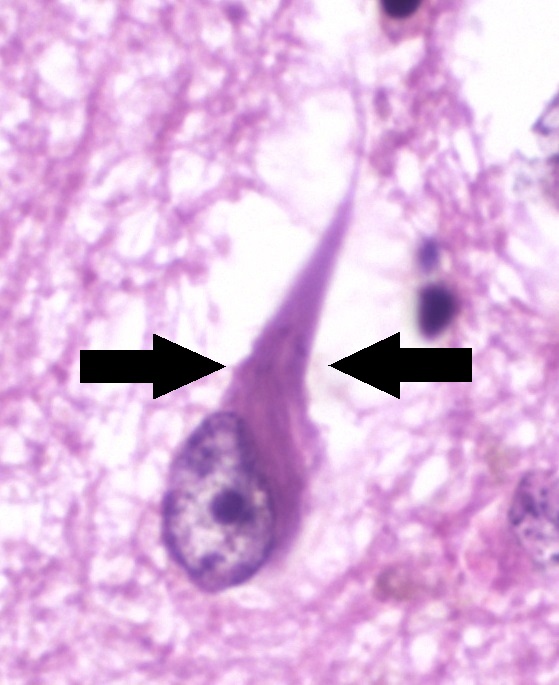
Image: Mikael Häggström, M.D., CC0, Wikimedia Commons

03 / Other organelles, cells and tissues
The damage spreads
- Mitochondria: broken ones can't be cleaned out, so the neuron runs low on energy and fills with harmful chemicals.
- Tau tangles: tau normally holds up the neuron's internal transport tracks. In Alzheimer's it knots up and the tracks collapse.
- Microglia (cleanup cells) try to eat the junk, fail, and cause long-term inflammation that hurts even more neurons.
- Astrocytes (star-shaped support cells) join that harmful loop.
- Synapses, the connections between neurons, are lost early, so brain cells stop talking to each other.
How diseased cells and tissue work
Diseased neurons can't clean themselves, power themselves or send signals. The damage starts in the hippocampus, the memory center, which can lose 25-65% of its neurons. Then it spreads to the cortex, which handles language, reasoning and personality. In the end the whole brain shrinks.
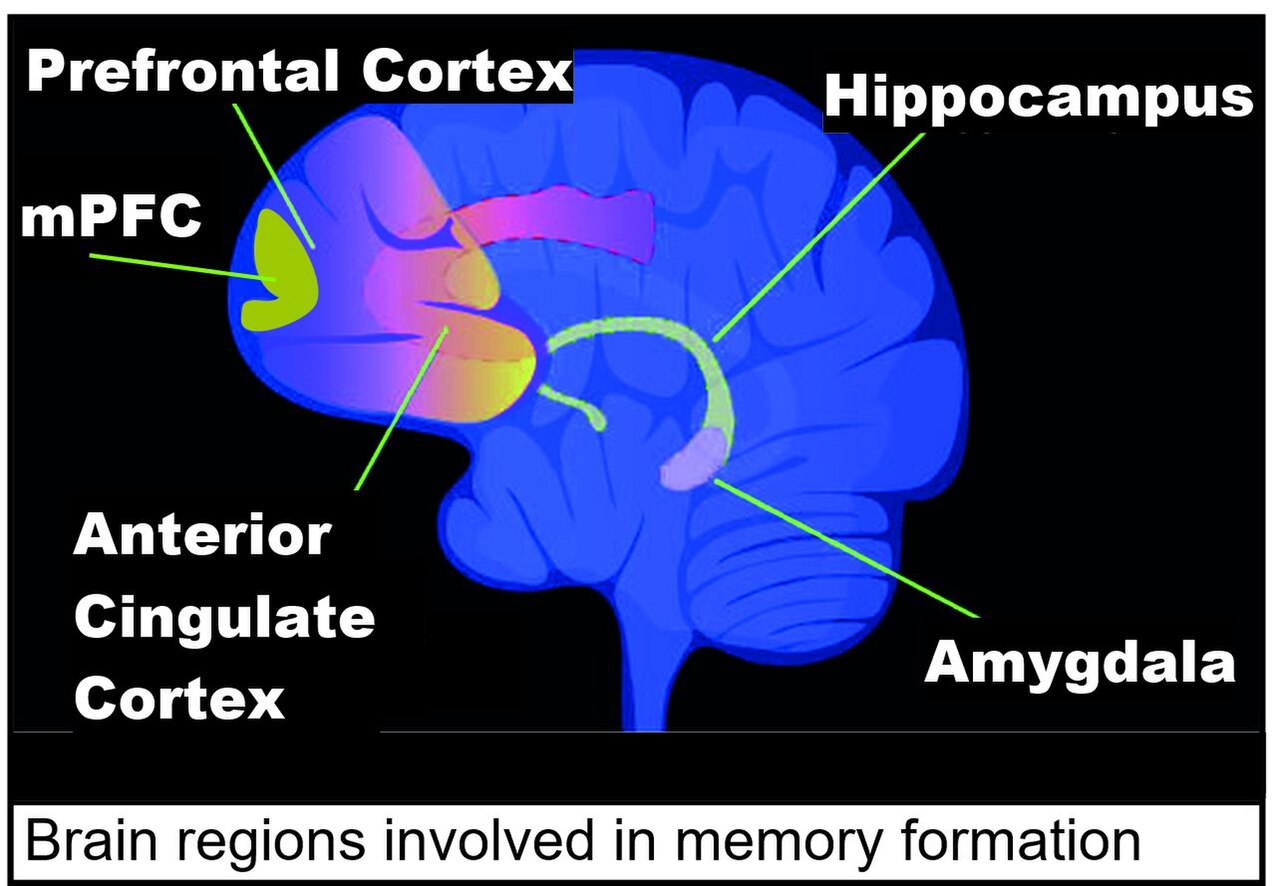
Image: Bernstein0275, CC BY-SA 4.0, Wikimedia Commons

Sources for this tab
- Lee JH, Yu WH, Kumar A, et al. (2010). Lysosomal proteolysis and autophagy require presenilin 1 and are disrupted by Alzheimer-related PS1 mutations. Cell 141(7):1146-1158. https://www.cell.com/cell/fulltext/S0092-8674(10)00544-1
- Lee JH, Yang DS, Goulbourne CN, et al., Nixon RA (2022). Faulty autolysosome acidification in Alzheimer's disease mouse models induces autophagic build-up of Aβ in neurons, yielding senile plaques. Nature Neuroscience 25:688-701. https://pmc.ncbi.nlm.nih.gov/articles/PMC9174056
- Nixon RA, Rubinsztein DC (2024). Mechanisms of autophagy-lysosome dysfunction in neurodegenerative diseases. Nature Reviews Molecular Cell Biology 25:926-946. https://pmc.ncbi.nlm.nih.gov/articles/PMC12239022/
- Mitophagy in Alzheimer's disease review (PMC7017092). https://pmc.ncbi.nlm.nih.gov/articles/PMC7017092/
- National Institute on Aging. What Happens to the Brain in Alzheimer's Disease? https://www.nia.nih.gov/health/alzheimers-causes-and-risk-factors/what-happens-brain-alzheimers-disease
- National Institute on Aging. Alzheimer's Disease Fact Sheet. https://www.nia.nih.gov/health/alzheimers-and-dementia/alzheimers-disease-fact-sheet
- Key brain cell interactions in Alzheimer's (PMC9745159). https://pmc.ncbi.nlm.nih.gov/articles/PMC9745159/
- Neuropathology of Alzheimer's disease update (PMC10209886). https://pmc.ncbi.nlm.nih.gov/articles/PMC10209886/
- Alzheimer's Association. Is Alzheimer's Genetic? https://www.alz.org/alzheimers-dementia/what-is-alzheimers/causes-and-risk-factors/genetics
- Alzheimer's Association. Causes and Risk Factors for Alzheimer's Disease. https://www.alz.org/alzheimers-dementia/what-is-alzheimers/causes-and-risk-factors
- National Institute on Aging. Alzheimer's Disease in People with Down Syndrome. https://www.nia.nih.gov/health/alzheimers-causes-and-risk-factors/alzheimers-disease-people-down-syndrome